Harrington: Of monuments and monarchy
Amid a bad few weeks for the royals, plans to honour Queen Elizabeth II with a statue have received little publicity
Friday, 27th February
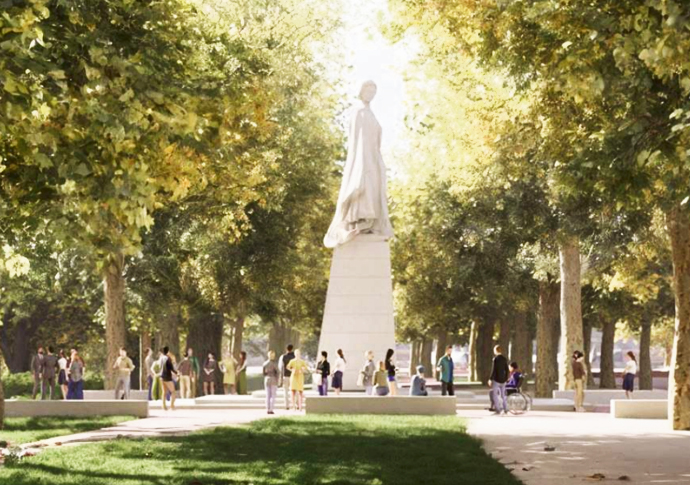
Proposed design for a statue of Queen Elizabeth II
IT’S been a bad, potentially fatal, few weeks for the monarchy and things are likely to get a lot, lot worse.
The 10 days of national mourning that followed the death of Queen Elizabeth II seem a lifetime ago following the arrest of her second son, now Andrew Mountbatten-Windsor.
Perhaps this is why there has been little effort to drive publicity about the details of new plans to honour her in and around St James’s Park.
In January it was announced that the main statue, by Martin Jennings on the Mall, would feature the queen standing up rather than on horseback, but no designs were made public.
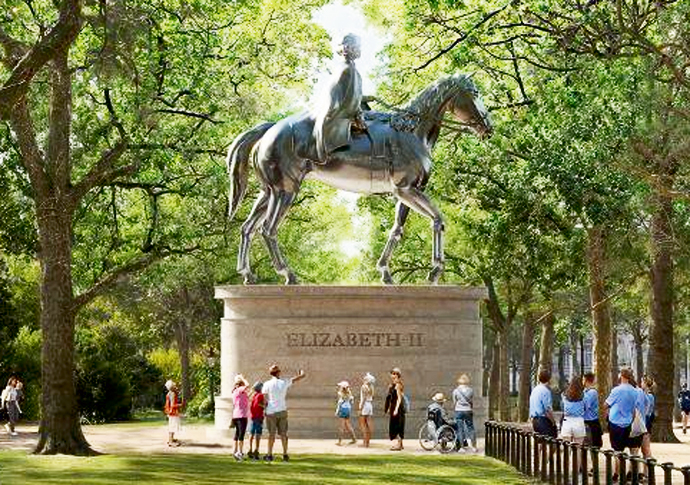
The original horseback stance that was rejected
Buried in the planning documents to Westminster City Council, there is one image that appears to show what this new long-awaited sculpture will look like. The application talks about the reasons behind the “non-equine approach”, adding: “The depiction of her late Majesty as a lone figure rather than on horseback is considered more fitting of a Monarch and more representative of Queen Elizabeth II.”
May Harrington suggest a better view to take is one of a country without the monarchy.
Royalists’ arguments against this have been for centuries wrapped in sentimentality rather than reason and – particularly now – need to be called out once and for all.
The monarchy is defended as a harmless tradition, a symbol of stability, or a boost to national pride.
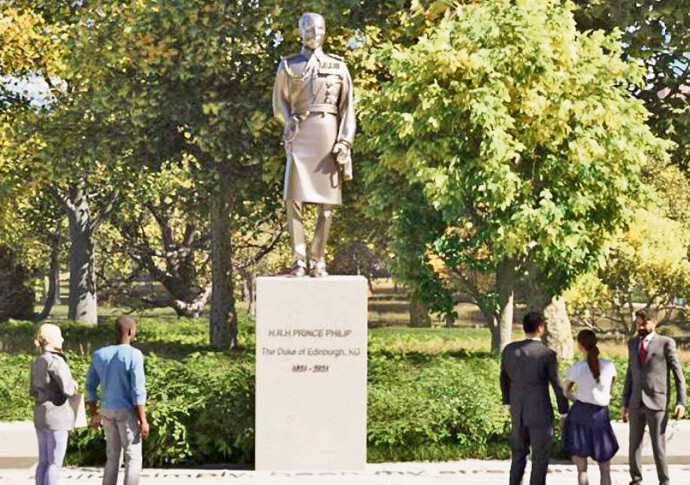
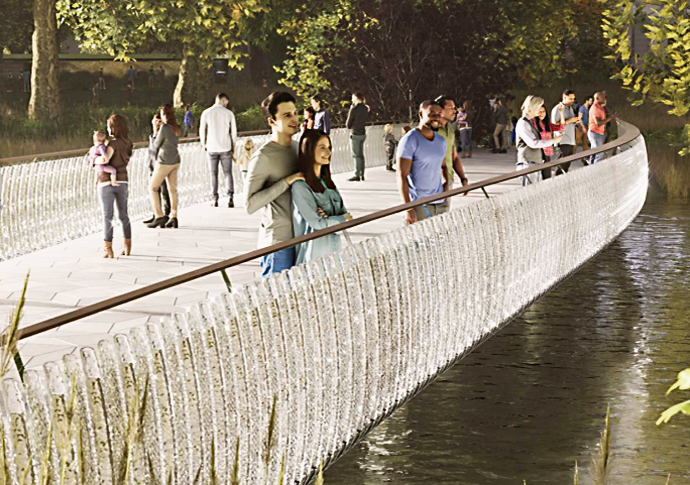
Prince Philip’s statue and, below, a widened bridge plan for St James’s Park – ‘allowing people to pause’
Yet tradition alone is a weak justification for an institution rooted in inherited privilege, public deference, and vast unearned wealth.
In a modern democracy power and status should be earned, scrutinised, and removable. The monarchy offers none of these safeguards. The financial cost is also routinely downplayed. At a time of crumbling public services, rising inequality, and stagnant wages, the idea that one family should be permanently funded by the public purse is increasingly indefensible.
The pageantry may distract, but it does not erase the reality of secrecy, political influence exercised without mandate, and an institution shielded from the accountability expected of every other publicly funded body.
That is not to say there is no place for remembrance. Statues, museums, and historic sites can and should exist, allowing people to reflect on the past without being ruled by it. Such monuments would likely prove popular with tourists and monarchists alike, offering history without hierarchy, and still helping to boost trade to central London.
A country confident in itself does not need a crowned head to validate its identity. Britain can respect its history while finally accepting that its future does not require a monarchy at all, equine approach or not.
