Underland: cinematic work of art that digs beneath Earth's skin has depth in spades
Adaptation of Robert Macfarlane’s best-seller grabs you immediately
Thursday, 26th March — By Dan Carrier
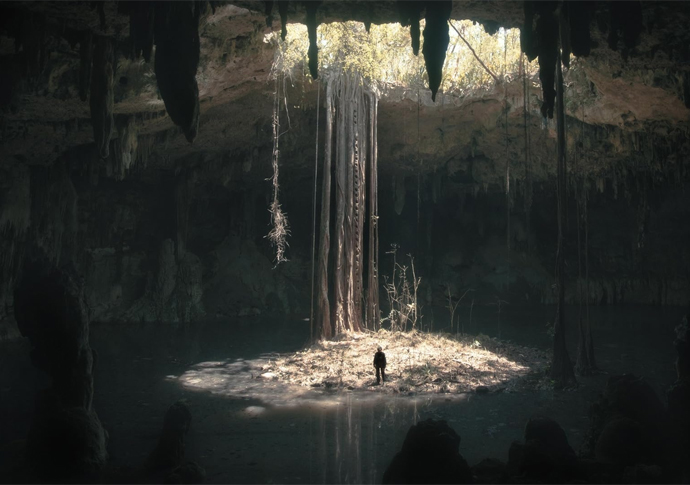
A moment of quiet beauty in Underland
UNDERLAND
Directed by Robert Petit
Certificate: PG
☆☆☆☆
HEADING upwards and outwards into the stratosphere fills us with a sense of awe, and is a regular cinematic trick, be it fiction or non fiction – think sci-fi or the Imax film of life on the International Space Station. Blasting off with a camera crew is nothing new.
And that is where this adaptation of Robert Macfarlane’s best seller immediately grabs you: this cinematic work of art asks us to look downwards with the same sense of awe.
In Underland, we are taken beneath the skin of the Earth, as breathless narrator Sandra Hutter explains. The journey begins at the foot of an ash tree and then takes us to the man-made tunnels beneath Las Vegas to the rock-eroded caves of Mexico. As an urban explorer considers as he travels through storm drains, when our species has long left the Earth the places most likely to remain for the longest are the tunnels we have carved out.
“Our journey begins somewhere beneath the skin of the earth where darkness thickens,” whispers Hutter.
“And sounds stir yet even here just inches below the surface is a place so alien to up above that nothing is familiar and all is strange.”
Director Roebert Petit trains a camera on people who have a relationship with the great beneath: we join Mexican archaeologists finding evidence of ancient Maya culture.
He considers how burial chambers were dug out and had a spiritual meaning, how the Earth’s geological processes and weather-beaten erosion have opened up chasms we can’t help but be tempted into – and also offer a scary and intimidating presence.
It is hardly surprising that throughout human history our religion-myths have an underworld where bad things happen. Imagine our ancestors looking into such cracks… they did not always provide a sense of safety and shelter.
There are moments of quiet beauty, as if we are being taken back into the womb of the planet.
It’s worth trying to watch this film on as big a screen as possible as it is stunning to look at.
If there is a downside, it is the too-heavy breath of the narrator that makes something already pretty mindblowing diluted by her overly serious and husky tones, and the grim orchestral soundtrack, which seems to be an attempt to add a depth and gravity that is there in spades already through Petit’s excellent direction.
