Tunnels vision: ‘There’s nothing comparable to this in London…’
The Extra gets a tour of underground wartime spaces amid £60m bid to create ‘major attraction’
Friday, 17th July — By Dan Carrier
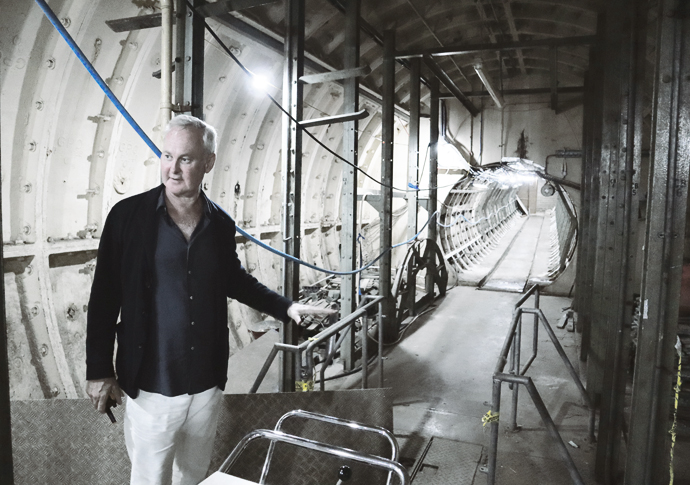
Angus Murray in the wartime tunnels 130 feet below the streets of Holborn
THE man behind a project to open up top-secret wartime tunnels in Holborn has told the Extra of the massive economic uplift the scheme will create.
Angus Murray is the brains behind a £60m project to bring visitors into a unique attraction – a series of spaces carved 130 feet below the streets of Holborn.
And he says the project, called The London Tunnels, would draw around four million visitors into the area, boosting income for shops and cafés and giving the Town Hall a business rates windfall.
Mr Murray gave the Extra an exclusive tour this week, and laid out designs as to how the subterranean network could become a destination boasting a heritage story and memorial to the 43,000 Londoners who died in the Blitz. The plans also include a visitor attraction using state-of-the-art technology with a focus on blockbuster film franchises.
The tunnels straddle the border between Camden and the City of London, and Mr Murray said both lack attractions at their heart. He said: “London is consistently ranked among the three most visited cities in the world, yet the two authorities at its historic centre capture far less of the direct tourism benefit than their location would suggest.”
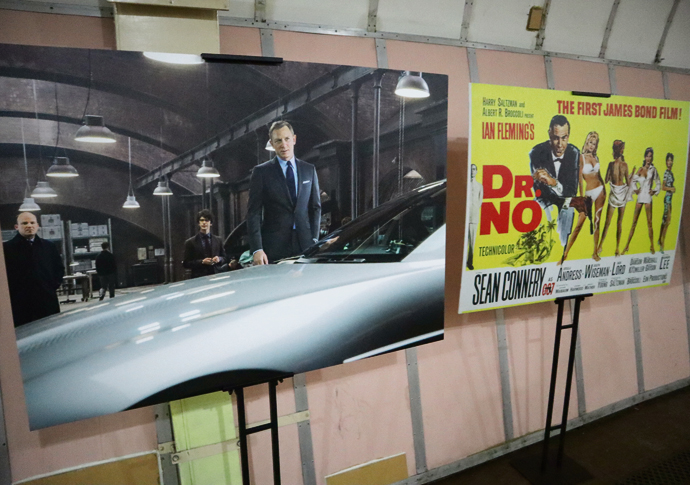
James Bond author Ian Fleming, who was a naval intelligence officer, is believed to have been inspired by the tunnels
He added that while visitors to the British Museum were plentiful, they rarely exit and head east towards Holborn and instead disperse into the West End and Covent Garden.
He added: “The Kingsway Exchange tunnels, a mile of Second World War and Cold War heritage beneath High Holborn, would be a major attraction.”
He said their research showed that it could become one of the top five tourist hot spots in the UK.
He added: “There is simply nothing comparable to this in London. Opening the tunnels to the public would mean holding, for the first time in the modern era, a major visitor attraction of Camden’s own and capturing, on their own ground, the visitor economy that has until now been generated and spent almost everywhere but within the borough boundaries.”
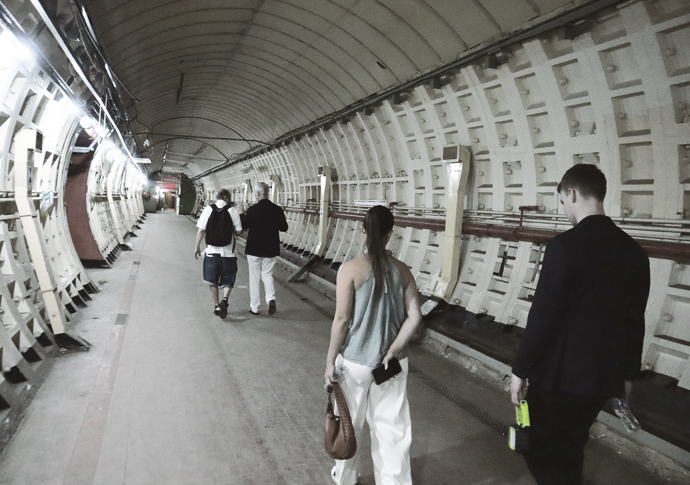
The scheme won planning consent in 2024 and the company has been raising the capital to fit out the attraction. Cold War heritage remains in place, including the deepest licensed bar in the UK, areas that once housed a canteen for spies and historic switchboard technology for communications.
The tunnels were sturdily built to be bomb-proof and are in good condition, added Mr Murray, and the rumblings above from Central line trains are the only giveaway as to how deep down they sit.
Work to dig out the tunnels began in 1940. As Nazi Germany attacked Britain and the Blitz rained bombs on Londoners, the government saw the need for deep shelters to protect civilians. The original plan was to build a network of shelters below the tube lines, and the Holborn network was designed to comfortably house 8,000 people.
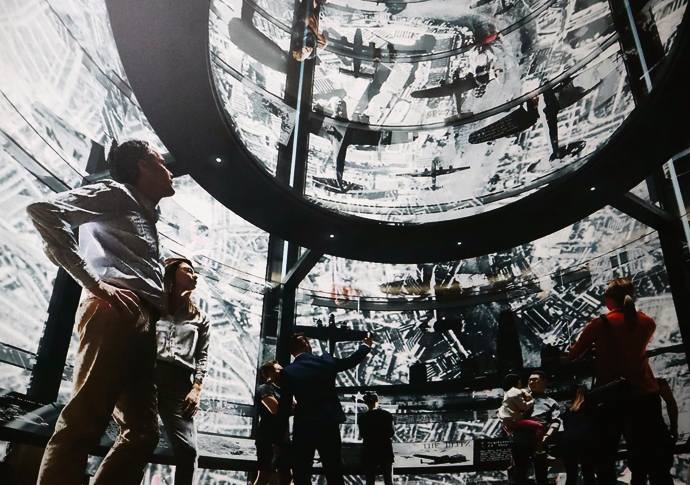
It is hoped that the tunnels project would draw millions of visitors into the area
By the time the tunnels were completed in 1942, the Battle of Britain had been won and air-aids became rarer.
In the immediate post-war period, four more tunnels were added as the space became a centre of Cold War communications. James Bond author Ian Fleming, a naval intelligence officer, is said to have visited the Holborn tunnels frequently – and used them as an inspiration for the gadget-obsessed spy called Q, who kitted Bond out with his array of secret weapons.
Due to its secrecy and deep-level bomb-proof situation, the tunnels became a Cold War communications headquarters. After the world was on the brink of a nuclear catastrophe because of the Cuban missile crisis in 1962, a hotline from the White House to Red Square was installed via the network. Later it was used by the Post Office and then British Telecoms as a telephone exchange, and was finally put up for sale by BT in 2008.
Mr Murray added: “This is a once-in-a-generation opportunity. It would be the equivalent of placing the London Eye in the middle of Camden.”
