‘The murals were seen as being for everyone’
A new book illustrates how the GLC spread its message of a world devoid of Thatcherism. Dan Carrier delves the archives...
Thursday, 18th June — By Dan Carrier
STRETCHING along the roof of County Hall, home to London’s government the Greater London Council, was a stark reminder from MPs sitting in Parliament across the Thames.
While Thatcherism was being sold as boom times for deregulating financial industries and selling off of publicly owned industries and utilities, the giant sign on the GLC headquarters was sobering: it was a regular update of how many Londoners were out of work.
The GLC was led by the Labour Party, its figurehead left-winger Ken Livingstone. And from its County Hall base, it set about protecting Londoners from the excesses of Thatcherism and recognising the capital’s needs, identities, and hopes for the future.
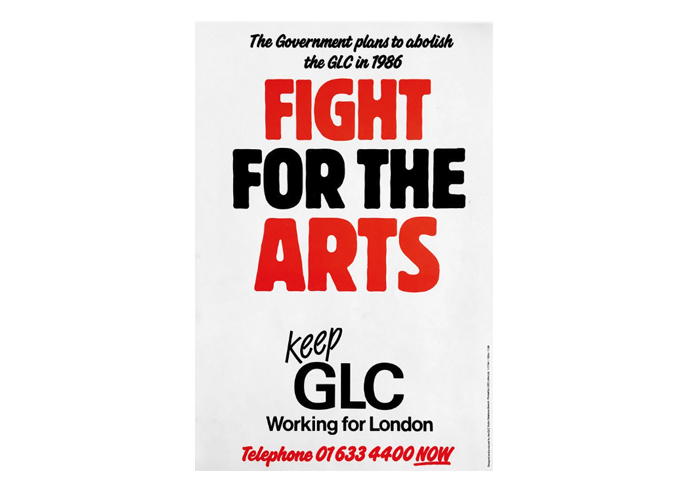
In London’s Ours!, historian Hazel Atashroo has scoured the London archives to peel back the years and look at the work of the GLC through a visual culture it created. The GLC saw their role as democratising public services, improving access to the arts and building a better London for everyone.
For Londoners of a certain vintage, looking through the book will bring back many memories of when the GLC offered an alternative vision for the UK, one that was rooted in William Morris-style artistic socialism, one that saw the collective as a strength, in stark contrast to Thatcher’s individualism.
For Hazel, whose research has focused on visual cultures of 1980s London, the story began when she came across a raft of films made by community groups in the early 1980s.
“I was writing a PhD about the 1980s under the title Communities and Culture,” she tells Review.
“I came across some community-made videos. I wondered why local governments were funding these films, and was interested by their political tone. Why were they paying for community media to be produced? I thought – that is interesting.
“The GLC had sponsored lots of art and community projects. I felt this was worth writing about, so I focused on the GLC.”
The GLC archive revealed an alternative story of 1980s Britain.
“Thatcher came to power in 1979, setting in motion a decade of political, economic and social change that was to redefine the relationship between state and society, in an increasingly neoliberal direction,” she writes.
Thatcher’s “no such thing as a society” ushered in a focus on individuality, competition, privatisation, deindustrialisation and attacking trade unions and workers.
High unemployment saw more than three million people out of work in the early 1980s, and in London, living standards were falling.
Social housing, transport and work were all under pressure – a stark contrast to the deregulated Docklands populated by Thatcher’s Yuppies.
While Thatcher claimed there was “no alternative”, the GLC set about showing there very clearly was – and in Hazel’s eye-catching and excellent book, we learn what those alternatives were.
In April 1981, Ken Livingstone-led Labour won control of the GLC.
“It was viewed as a rare chance for the left to imagine an alternative London, and take action,” adds Hazel. “How might London be governed differently, and in whose interests?”
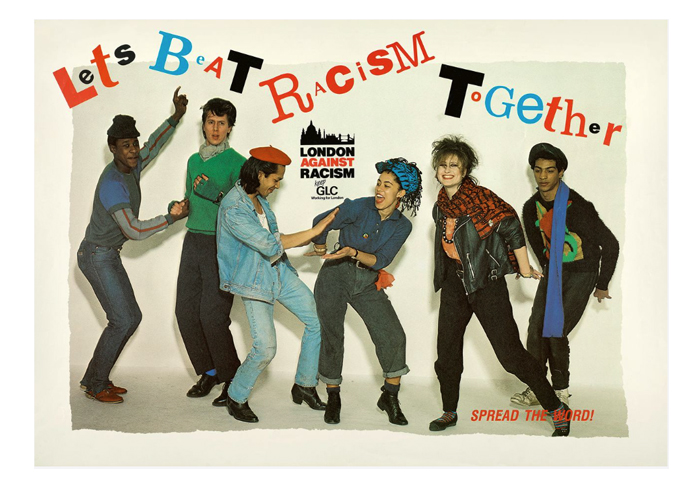
The book draws on the eye-catching public information, linked to the campaigns the GLC ran to improve the lives of Londoners.
“Early 1980s London was adjusting to an increasingly global understanding of its identity,” she points out.
“Although London had always been a city in which people from different cultures found themselves living and working side by side, increased post-war immigration from countries in the Commonwealth led to an uneasy co-existence between social groups.”
Thatcher stirred up conflict in a TV interview, saying immigration was “swamping the city”.
In London, minority groups faced discrimination on top of the everyday lived experiences of racism in schools, healthcare, and housing.
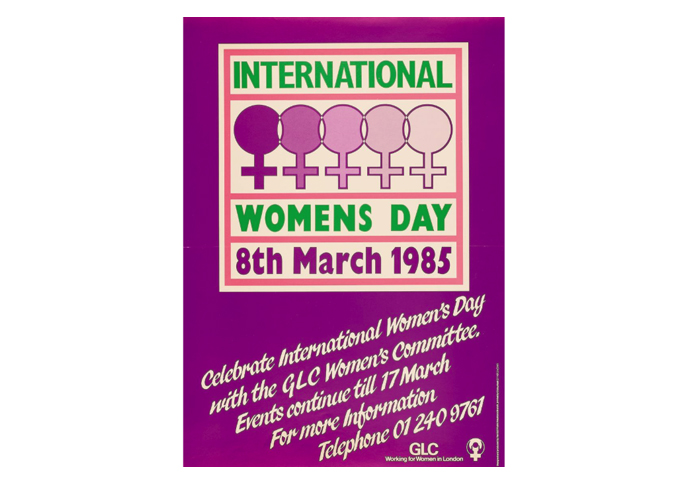
“To address this, Livingstone’s GLC strategy was to draw together a broad coalition of support from London’s many overlooked minority communities in recognition of their experience of discrimination from state institutions,” adds Hazel.
To promote these counter-narratives, the GLC turned to visual communications tricks to get the word out, embarked on popular culture and public events to bring people together and support the aims of social inclusion and political change.
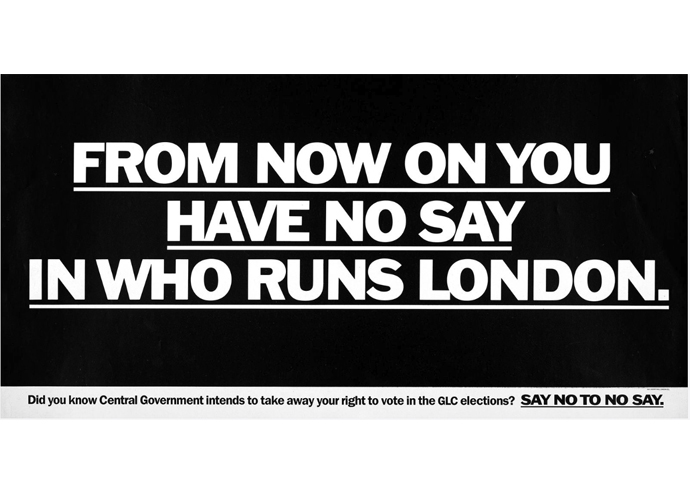
Thatcher, of course, hated it and would scrap the GLC in 1986: the GLC dared to imagine an alternative to Thatcherism in the form of “an equitable social democratic vision” and she wasn’t standing for it.
As Hazel says, using the GLC aimed to use its resources for all.
“The thinking of the time was we are all tax-payers but only a small portion of us go to the opera and the ballet, which were publicly funded,” reflects Hazel.
“That meant the tax-payer was essentially subsidising the middle classes going to opera. The GLC said: ‘We need to look at different kinds of public service, expanding what culture was on offer’.”
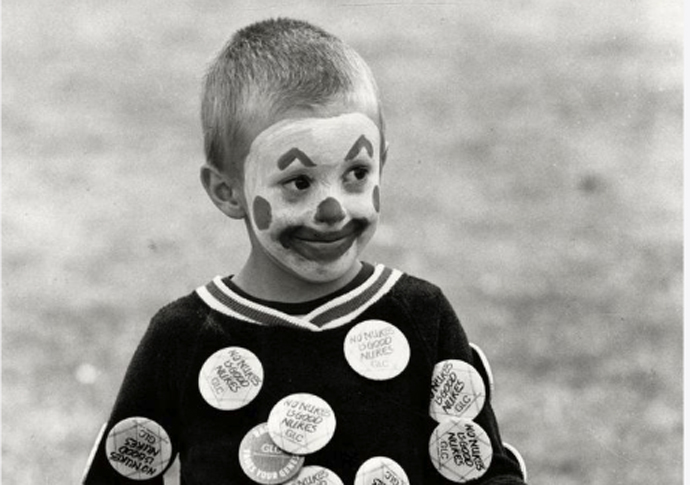
The book shows how the GLC tackled issues Londoners faced. From the GLC Thamesday festivals to their stance on wider political issues, for example, nuclear power and nuclear weapons, to Apartheid South Africa, the privatisation of BT to how the NHS was being run – the GLC was involved across the board.
“The images speak for themselves,” adds Hazel. “Posters from the time reflect the conditions and other contexts.
“I looked at areas where the GLC was creating conversations in different locations.”
And as well as eye-catching posters, the GLC used public art to tell a story.“London has had a longstanding mural movement and the GLC drew on this,” she says. “These muralists were working in communities and creating public art. They were influenced in part by history and left-wing politics.
“The GLC got involved as sponsors of mural paintings and sponsored murals from particular groups and new artists who had not worked in that way before. This expanded who was producing these murals and gave artists space to talk about issues that the GLC felt were important.
“They were making public art about ideas which were supportive of themes the GLC were working on.
“It brought in different communities and helped people engage together – and the murals were seen as being for everyone.”
• London’s Ours! Images from the Greater London Council 1981-1985. By Hazel Atashroo, Four Corners Publishers, £20
