Rock Against Racism – how protest and music became the concept of a generation
Fifty years on, musicians Dave Randall and Roger Tichborne reflect on the political climate of the time as the Electric Ballroom and 100 Club get set to host anniversary concerts
Thursday, 12th March — By Dan Carrier
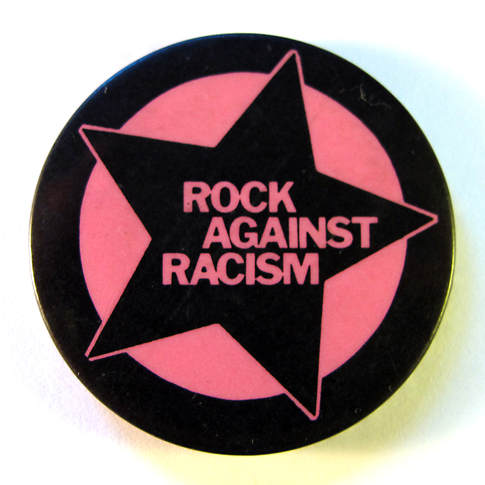
Rock Against Racism was founded in 1976 [Danny Birchall]
IT was 50 years ago that a Britain struggling with recession saw a horrible trend in racist, dog-whistle politics: the breakdown of the post-war consensus, which ushered in the neo-liberal politics of Thatcherism, was taking shape.
Enoch Powell’s “Rivers of Blood” speech and the National Front set an atmosphere of a nation ill at ease with itself: and after the musician Eric Clapton went on a drunken, racist rant on stage in Birmingham, it was a catalyst for a fight back.
Musicians were incensed how the guitarist could feel comfortable expressing such ignorant views – and came together to form Rock Against Racism.
To mark the half-century since this powerful movement came together – and show why the battle they fought is upon us again – the Electric Ballroom is hosting a concert, featuring Southall-based reggae legends Misty In Roots on April 4, and the 100 Club is putting on a ska night on April 3 with legendary north London band, The False Dots.
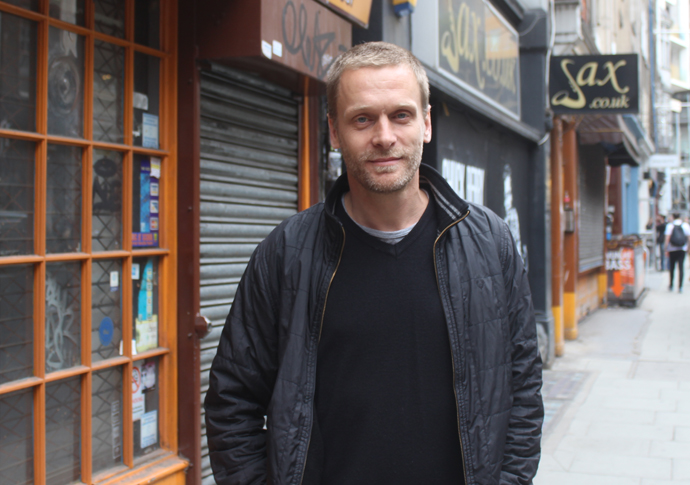
Dave Randall, autor of Sound System: The Political Power of Music
Musician Dave Randall wrote Sound System: The Political Power of Music in 2017 and has now updated it.
He reflects how conditions in the 1970s helped foster division – and the comparison are clear today. James Callaghan’s government had gone to the International Monetary Fund for a loan – with predictable strings attached, namely to cut public spending and deregulate the market.
“It had a real impact on the economy and on everyone’s lives – unemployment continued to nosedive,” Dave says. “People started asking questions about where the country was going. That was the environment that enabled the far right, then typified by the National Front. It was a very worrying time and it was not just fascists on the streets, the rhetoric was being taken up and repeated, and not just by politicians, but by pop stars.
“And after Clapton went on a racist rant, a number of left-wing musicians came together to say enough is enough.”
He recalls: “They wrote to the music press, announcing the creation of Rock Against Racism. It ended, famously, with the line – ‘Who shot the sheriff? It certainly wasn’t you, Eric’. That was the birth of Rock Against Racism.”
Dave, who played guitar in the hit-making band Faithless, grew up in Essex in the 1980s, and saw first hand how RAR made an impact.
“There was racism, unfortunately, but it was considered really uncool. The cool kids were anti-racists – they were into reggae – and you could say that was a direct impact of the RAR movement,” he says.
“It was set up with an ambition, with creative flavour and was unpredictable, that has not been seen in British politics since. It was very exciting.”
A manifesto statement, written by founder David Widgery, said “how people find their pleasure, entertainment and celebration is also how they find their sexual identity, their political courage and their strength to change”.
It added: “We want rebel music, street music. Music that breaks down people’s fear of one another. Crisis music. Now music. Music that knows who the real enemy is. Rock Against Racism. LOVE MUSIC HATE RACISM.”
Today, the power of cultural movements to tackle division is as important as ever, Dave says. “The take away from that is when you talk about music you are talking about far more than entertainment and commerce but part of the process of becoming fully human and part of the process of forging our humanity.”
“RAR knew they had to intervene to make sure that protest and music became the concept of a generation. They were successful and changed British society. Growing up in the 1980s and being a professional musician in the late 1990s, I found first-hand how that music really does make an impact on a society beyond the gig, the concert, the festival. The way musicians react to war, react to Gaza, react to issues at home – that really matters.”
The book has been updated to include an expanding chapter on sexism and racism in the music industry, the use of AI and Spotify and artists’ reaction to Gaza.
“A lot of progress was made with, for example, gender parity on festival line-ups,” Dave says. “But it is obvious today we have a lot of work still to do.”
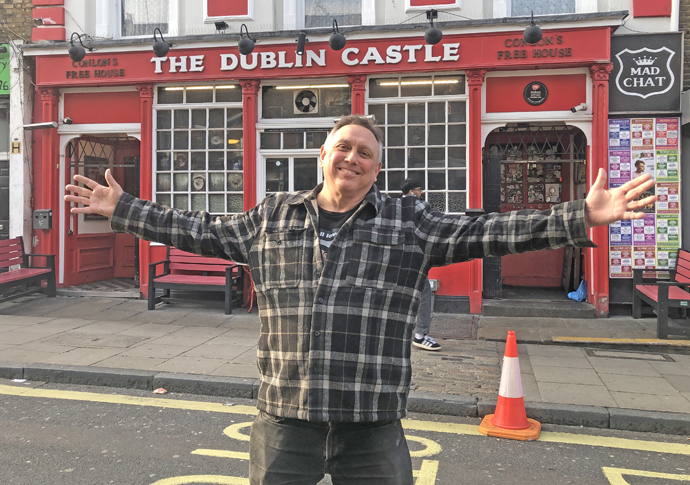
Roger Tichborne
Ska musician Roger Tichborne runs the Mill Hill Music Complex – a set of rehearsal and recording studios, where musicians such as Amy Winehouse had honed their talents. And his ska band, The False Dots, founded in 1979, continue to gig today and are appearing at The 100 Club as part of the same celebration that sees Misty In Roots perform in Camden.
He recalls how Rock Against Racism made an impact – and remains as important and relevant today.
“I was at school. It was 1977 and I had got into punk and the anti-racist thing really resonated with us,” he remembers.
“The Clash played for RAR in Victoria Park and we all went along. There were so many people there that day, you couldn’t hear the bands. Another gig followed – we gathered in Trafalgar Square and marched to Brockwell Park, where Elvis Costello and Aswad played. It was a great day out.”
These experiences prompted Roger to pick a guitar. “We got a band together in 1979 and it has been going for 47 years.”
His band put on benefit gigs for RaR, and he saw how the ska movement became a vehicle to counter the populist right.
“I didn’t realise how important and foundational it was at the time,” he reflects. “The Specials and the Two Tone movement burst on to the scene. We’d been a punk band and we went to see The Specials at the Lyceum.
“The Specials came on and they were mindblowing. They played ska, and politics was central to what they were doing. It really changed things.
“Before then, you had the likes of Bernard Manning making racist jokes on primetime TV. But within five years, RAR had helped make this unacceptable – and it remained so until recently, as we have watched the march of the right, of populism, of people like Tommy Robinson – it’s coming back and it is vital we stand up again to this.”
Roger had grown up in a family who were anti-fascist and anti-racist.
“My father had been in the air force during World War Two,” he says. “He hated fascism – so much so he would refuse to go to Spain while Franco was in charge. My mother was from an Irish Republican background and racism was just not at all acceptable in their eyes. My grandfather had come from Ireland to Camden Town and remembered the racist signs in windows.
“The skinhead and ska thing was based on Jamaican ska and the National Front tried to hijack it. There were these terrible bands who wrote songs with racist lyrics. It went against everything the skinheads were about. The skinhead movement had been influenced by the Jamaican Rude Boy,” he remembers.
“But racism was on the rise. When people from the Caribbean immigrated to the UK after the war, most saw them as coming to help, coming here to work and contribute to society. But within a decade a populist right movement had turned people against it.”
Music was a catalyst for the fight back, and as Dave and Roger state, it helped unite a generation.
“The Two Tone bands had songs with a political message that were relatable,” adds Roger. “It remains that way today.”
• Misty in Roots (50th Anniversary Show) at the Electric Ballroom, April 4
https://electricballroom.co.uk/misty-in-roots-50th-anniversary-show-2/
• Pork Pie, The Deltones and The False Dots at The 100 Club, April 3
https://www.the100club.co.uk/clubevents/pork-pie-the-deltones-and-the-false-dots/
• Sound System: The Political Power of Music. By Dave Randall. Pluto Press, £17.99
