Relocation, relocation, relocation: a call to arms to reclaim ‘migrant’
Historian Colin Grant’s new book examines what the word ‘migrant’ really means and when is it possible to feel ‘British’. Dan Carrier reports
Thursday, 2nd July — By Dan Carrier
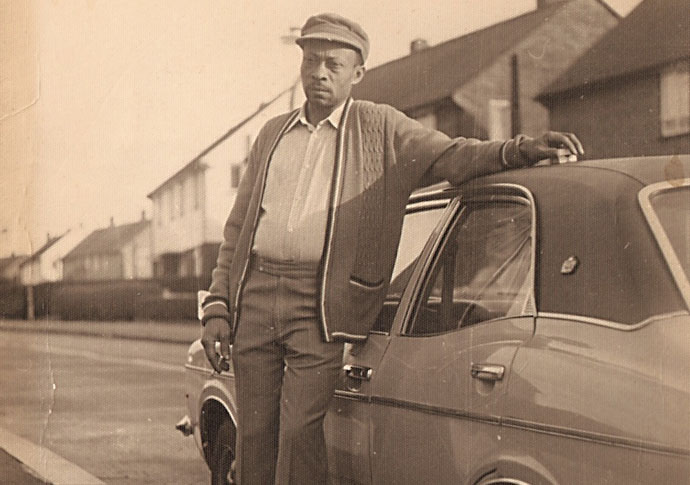
Bageye, Colin Grant’s father
In a world of disinformation, the term migrant has become loaded with negativity. As populist politicians look for easy targets to obscure the true villains who have made the UK a place of the ultra-wealthy and working poor, the idea that someone who had travelled to the UK to build a life is somehow a burden is a clear case of Orwellian doublespeak.
In his latest work, What We Leave We Carry, the historian Colin Grant seeks to ask what the word migrant really means – and issues a call to arms to reclaim it.
“Migrants are among the bravest people in the world,” he reflects. “They take a chance, they leave their homes and they come for a better life. I reject the negativity that some try to foist on the word. It is difficult to shift – but we must.”
The book is made up of interviews with contributors from across the world. They include an Algerian psychotherapist, a Spanish-born, Ghanaian-heritage kickboxer, a Serbian author, a Cuban composer, an Iranian poet, an Irish journalist, an Australian festival programmer, and an Indian teacher – and the story of Colin’s uncle Castus, who flew in on a BOAC flight from Kingston, Jamaica, in 1961. The stories illustrate a range of motivations – and shared experiences of the challenges and opportunities of making a new life in a new place.
Colin’s background gives him an experience to draw on.
“I am the son of migrants,” he says. “My parents came from Jamaica in 1959 and when I was growing up, it was very clear that I was an associate migrant. I wasn’t really someone who could proudly or openly tell people that I was British. I was asked where I was from, I would say I was British by birth but Jamaican by will and inclination. My father would challenge me – he’d say ‘stop talking tripe, you are English, get that straight, don’t let the man take you for a fool’.”
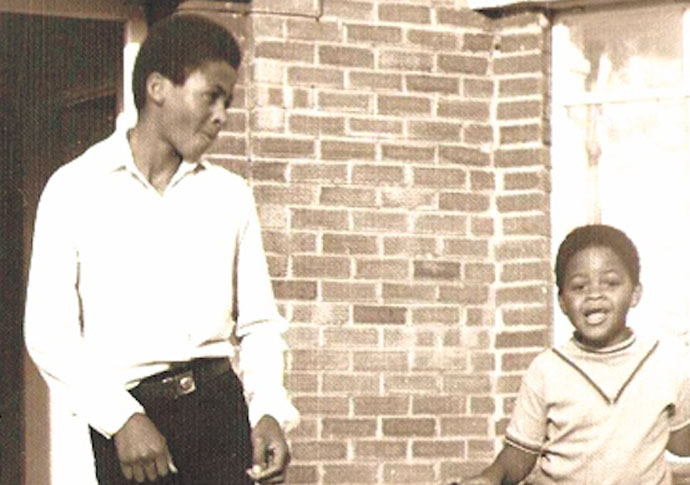
Colin Grant and his brother Chris
He recalls the awful impact Tory MP Enoch Powell’s infamous “Rivers of Blood’ speech had on him in 1968 as a schoolboy in Luton. Powell used inflammatory language and called for migrants to be “sent home”.
“I was at a Catholic school and my friends were Irish – all Flynns, O’Hearns, O’Learys,” he remembers. “The story was awash in the newspapers and they were teasing me, saying you better pack your bags, you’re on your way out. The headmistress berated these Irish kids. She said something that I will never forget: ‘if they come for Colin, they’ll be coming for you.’ I’ve always held on to that notion of the importance of allyship. Even though I was born here, I’m the son of migrants and my position may not be secure, so I’ve always been primed to pay attention to migrants.”
While writing a book on the Windrush generation, Colin was struck by the similarities migrants from around the globe have experienced.
“Many people recognised themselves in Caribbean migration because there are so many commonalities,” he says. “In some regards this country is a nation of migrants. I wanted to explore the degree to which that notion is true.”
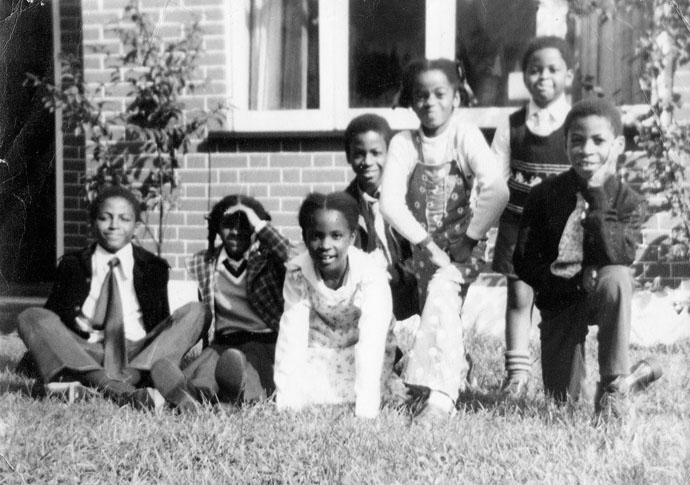
The Grant family in the Farley Hill days
And he asks why the truth about migrants is the polar opposite of how they are portrayed.
The nonsensical position that migrants are simultaneously “taking people’s jobs but at the same time are also scroungers” is a statement constantly aired by the Reform movement and needs to be tackled, he adds. “This increasingly toxic narrative is happening daily,” he says. “No migrant I’ve ever met comes to receive handouts. They don’t sit on their hands. In fact, a lot of the people in What We Leave We Carry were carrying out what we know as remittance culture – they’re keeping people afloat back home, so they’re coming with a great sense of responsibility. They’re bringing energy, determination.”
The title for the book comes from a poem by John Le Rose, who founded the New Beacon bookshop in Finsbury Park in the 1960s. “That notion fuelled the book, because it speaks to the idea of what do you leave behind when you leave your country of origin and what you bring with you, both physically and emotionally,” he reflects.
“Sometimes we forget the emotional cost. Often migrants don’t have time to consider their internal lives – they’re getting on. My father was of the opinion that if there’s a roof over your head, there’s food in your belly, there’s shoes on your feet, what else do you want?
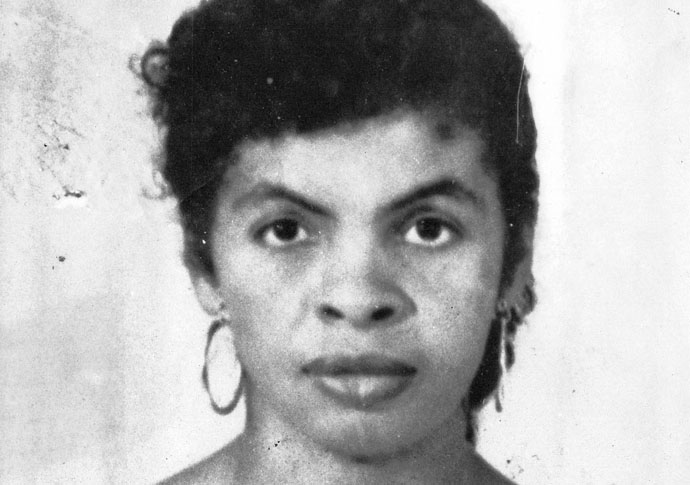
Colin’s mother Ethlyn
“One of the key questions we asked was ‘what object or idea they brought with them that sustained their lives.’” He recalls a Serbian contributor who spoke of the importance of a coffee grinder and how the smell of the coffee and the process was a stark reminder of where she was born. A man who came from Cameroon recalled his mother’s actions before he left – she gave each of his fingers a little bite. “She was conferring an ancestral charm on him. When he got to England his ancestors would look after him,” Colin adds.
“Stories like that show you the humanity of the people and the kind of quirkiness you will never hear in mainstream press.”
And despite the negativity of the so-called hostile environment beloved by Home Secretaries, migrants speak of a UK as a place of warmth. “If you were to do an audit of all the answers, it was very positive. They had a very celebrative opinion,” he says. Part of this is shaped by a “legacy” view nurtured from a home country before migrating here.
“The view of Britain that they had before they left their own homes was interesting – often it came from literature, and there’s a very funny story by a woman called Clementine Burnley, who talks about romantic novelists,” he says. “She thought she’d meet people on stallions in long shirts who looked charming and erudite. She thought that when she kissed an Englishman sparks would fly.”
Clementine, who lives in Glasgow, also voiced a sense of how the nation had shaped her character.
“One question was what was your moment when you feel you’re becoming British?,” he says. Clementine recalled how in her country of origin, Cameroon, she had grown up schooled never to ignore anyone.
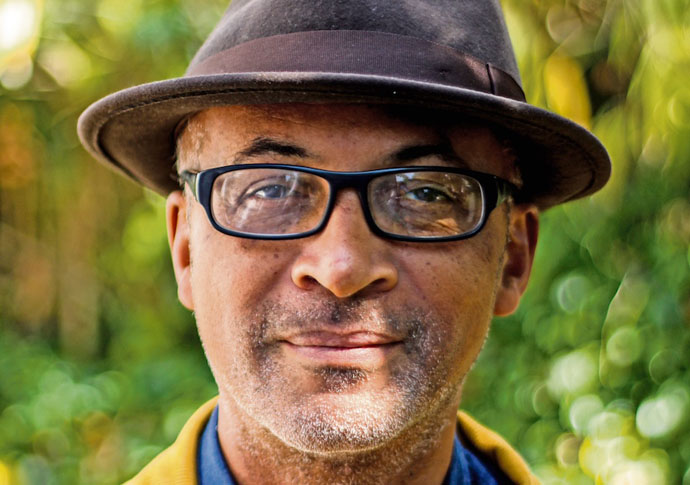
Colin Grant [Dominic Martlew]
She took this attitude to Glasgow, and recalled it would take her a long time to walk down the street as she was so used to stopping to greet people.
“She said that she knew she was becoming British when it only took her 15 minutes, not four hours, to walk down the road,” he says.
The wonderful, personal stories that flow through this powerfully human book are a strong antidote to the ethno-nationalist rhetoric dominating public conversation. Colin recalls the documentary film-maker Humphrey Jennings, who in the 1940s made films to explain what Britain meant and why it was worth fighting for. “The Jennings film Listen To Britain shows the best of Britain – people supporting each other and celebrating the joy of life. That’s the sense of Britain that I hold to. Sometimes it’s difficult to locate it because it’s shrouded with noise. The Italians say ‘bella figura’ – show your best face to the world. I want Britain to do that. Migrants come here for the best of Britain. Let’s not let them down by showing them this was a myth.”
• What We Leave We Carry: Voices of Migration to Britain. By Colin Grant, Penguin, £22
