‘Music is, and has always been, part of drawing out feelings’
Musician Jesse Hackett tells Dan Carrier how his mother’s passing partly inspired the creation of his latest album, Nocturnes
Friday, 13th February — By Dan Carrier

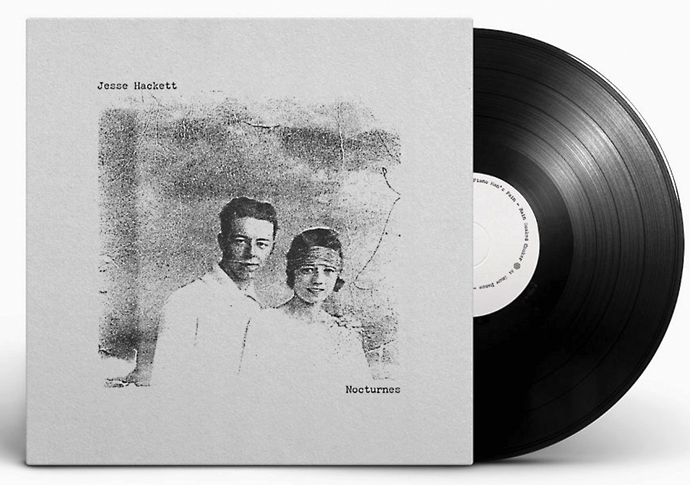
Jesse Hacket, whose new album Nocturnes sees him return to the piano
A COMPOSITION is not forged in a vacuum – the musician draws on an archive of influences and passions: and Jesse Hackett’s new album has seen him return once again to his primary instrument, and pour a lifetime of playing into new work.
Jesse has been playing the piano for four decades but his musical career has seen him span various instruments. His work includes playing keyboard in Blur frontman Damon Albarn’ band Gorillaz, and as well as a raft of solo projects, he worked with the Owiny Sigoma band, a collective of London and Nairobi musicians.
But for his latest work, Nocturnes, he has returned to the piano.
The new album was written at his Dartmouth Park home, and partly inspired by the loss of his mother, the artist Judy Hackett, last year.
“Music is, and has always been, part of drawing out feelings,” he reflects.
“This record was born during a hard time when mum was really ill. I was going through a complicated season in my life at that time – but these are often the times you do really good work, because you mean it, you get it and it is therapy.
“You pour everything into it. Nothing else would do the trick for me as playing and writing – that is always the way.”
Jesse is following in a family tradition.
“I was integrated into playing piano through my mother,” he says. “My grandmother Blanche was a piano teacher living in Hull. By day she was a factory worker – she had left school aged 13 and worked in a place producing a lead block that was used as a cleaning agent for metal.
“But she was an educator, a professional teacher. She taught piano privately after her shift. It meant my mother and my aunt were brought up playing the piano, while my grandfather Albert played the banjo and harmonica. Blanche was accomplished – she played classical music to a high standard, but she also played the blues – stuff like Lead Belly. My mother wanted to keep this tradition alive so she got me and my brother playing.”
And from sitting on a piano stool at an early age, Jesse was interested in composing.
“We began lessons with a teacher called Agaki Kobayshi, who lived in Belsize Park,” he recalls.
“She had two grand pianos. I always remember how it had a serene and peaceful atmosphere – that has stuck with me, and something I have found in other pianists’ homes.
“She had a very different approach to teaching. She was not strictly classical. I was encouraged to write my own music from the start.”
Jesse recalls other influences – including his childhood passion for science fiction films and comics.
“It was the era of great special effects – people like Jim Henson’s Creature Workshop, films like The Dark Crystal, H R Geiger and the Underground Comics. I was really into monsters and robots and I made my own comics,” he adds.
“I decided I’d write a piece of music for a comic I had made. It was called Street Ghouls and was for four piano players.”
Another spur for the LP was exploring the tones of a new keyboard he had installed in his home studio.
“I had not used a digital piano, but recorded with a real piano in the past,” he remembers.
“This new keyboard inspired me to sit down and start playing and writing from a new kind of space. I have tried a lot of different things with my music and I wanted to go back to my primary passion.
“I started thinking of melodies and harmonies, began writing sketches. My work comes out of improvisation. I do not sit down and write scores. I go to the keyboard and close my eyes and my hands find patterns and shapes. It just begins to come and form.”
Jesse has a track record of experimentation: his work with the Owiny Sigoma group saw him head to Kenya and make music using a range of instruments. Later, he would create an album using a discarded keyboard he found at a recycling centre in Islington.
While exploring the new instrument – a Roland D88, which allows the musician a variety of synths, pianos and organs – Jesse shared his ideas with the Amsterdam-based flautist Finn Peters.
“He liked one of the sketches of music I had made,” recalls Jesse. “He said it was like a sonata, and I liked the sound of that – a sonata! It was different from my previous works.”
The new album blends classical and jazz to create a depth of tones that forge an atmospheric immersion of the senses.
The tunes draw on three key inspirations.
“I have always loved the French Impressionist composers like Erik Satie, Raeli, Debussy, and I have always loved film scores – the likes of Angelo Badalamenti, who scored music for David Lynch’s Twin Peaks, and Spaghetti Western originator Ennio Morricone,” he adds.
The album also has a jazz aesthetic, with Jesse referencing Charlie Mingus.
“It has a kind of jazz noir sound,” he explains. “I started with melodies and harmonies – and then Finn’s flute brings the top line out of the tune. He brought the track to life. And it inspired me to write more.”
The album began with vocals – but the finished project is purely instrumental. It is another example of Jesse’s collaborative approach to creating and composing.
“Initially, I had been writing lyrics but I stripped them out when I played it to the label,” he says. “It works like that – you play something to a collaborator and they hear it and the music becomes something else. This record was going to be a collection of songs, but we stripped it down and made it instrumental.
“When I work with labels, I like to give them a choice and not be precious about the work. Being instrumental has made it far more coherent. If you trust someone – and I work with labels that I really respect – then that trust should be utilised. It means giving people power. I like that. They approach your work in a much more objective way. Your music gets reinvented – and I feel that is a really nice part of the process.”
The album has been released by Hivemind, based in Brighton and run by Marc Teare, who Jesse had admired from afar.
“If you can find people who you trust to work with, it is a stroke of luck – you cannot do everything. I am good at generating ideas, and to be fair, sometimes you do not know the good ones from the bad.”
The album has been cathartic for Jesse: he states creativity is always a way to deal with all emotions and feelings.
“It has definitely been a big part of dealing with my grief,” he adds.
“When my mother passed away, instead of making a small memorial leaflet I made a 60-page, glossy magazine of her life and her art.
“The process of making it was wonderful. I was scanning pictures of her art as sunlight came in through the window and dappled on pictures of her art and her life. I felt it was such a gift she had given me – a gift of creativity.
“It meant I could grieve in a way that was positive – it is exactly what she would have wanted me to do – stick to your creativity, keep going.”
• Jesse Hackett’s Nocturnes is released by Hive Mind Records on February 27. Details at https://hivemindrecords.bandcamp.com/ Instagram: @jessehackettonline Website: Jessehackett.com
