‘Like The Beatles in Liverpool, Madness was the folk music of the day’
A 1980 film about Camden’s finest, Madness, has been given the BFI’s restoration treatment. Dan Carrier talks to its director, Dave Robinson
Thursday, 1st October — By Dan Carrier
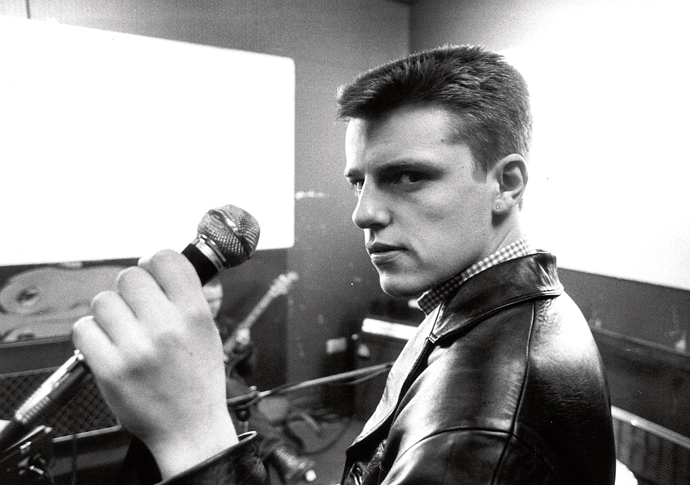
Lead singer Suggs in the feature film Take It or Leave It – re-released by the BFI this week [Dave Robinson]
IT is not, perhaps, the usual way of choosing the entertainment for your wedding reception.
But for Dave Robinson it was the perfect opportunity to combine the happiest day of his life with a spot of work.
It was 1979 and the founder of legendary label Stiff Records was organising his big day.
He’d been told of a new band called Madness who were worth checking out – the seven-piece had been turning the dance floor of the Dublin Castle into a stomping sweatbox during their weekly residence at the Parkway pub in Camden Town – and he had the bright idea that he could get them on stage to entertain his nearest and dearest.
“People said to me, you need to see this band,” he recalls. “Several friends had said they were influenced by Ian Drury, and that sounded good. I hadn’t followed the Two-Tone movement too much but I’d been tipped off that this band was something.
“I thought, let’s kill two birds with one stone – I’ll book them for my wedding.”
Dave’s career spans photographer, band manager and record label owner, record and video producer and film director.
His stable includes Kirsty MacColl, The Pogues, Ian Drury, Nick Lowe and Elvis Costello. He also founded Stiff Records, a label that forged the music of the late 1970s and 1980s.
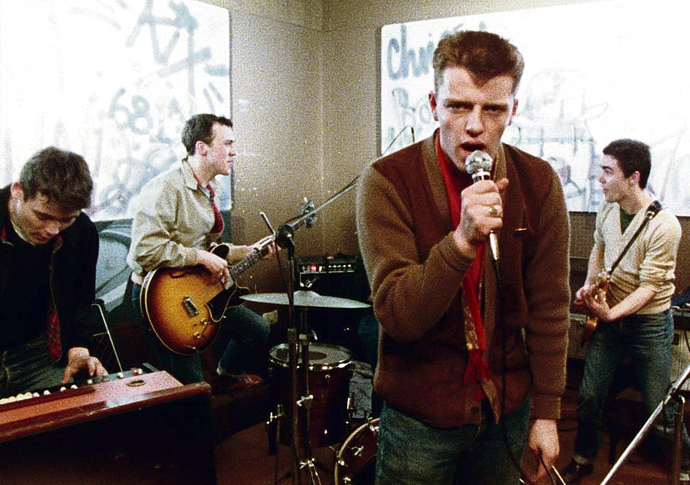
The NW5 ‘Nutty Boys’
And it was Dave who helped catapult Camden Town’s flagship band Madness into the big time.
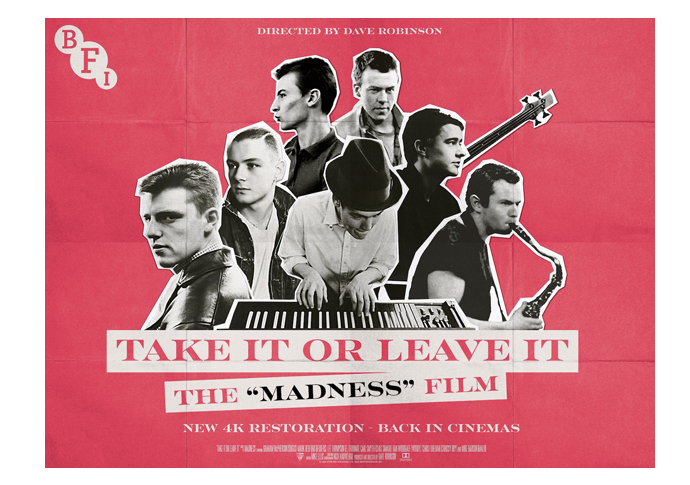
In October, Take It or Leave It – a film he shot and directed in 1980 – starred Madness and traces how a group of boys from Kentish Town wrote the songs that have become the London folk music for a generation.
“I’d booked the Clarendon in Hammersmith for the reception,” he remembers.
“Madness duly turned up. I needed to see them but they did not have a gig lined up. They had had one hit by then, but to be honest, it had passed me by.
“So I invited them to my wedding. My wife was not very happy with the idea but it turned out well.
“I remember I spoke to them before in the dressing room to make sure they were on their best behaviour. I said to them: if you are thinking of doing anything ‘interesting’, I will come in here and break your elbows and then your knees with a baseball bat. Are we clear? They behaved very well.
“I remember hearing One Step Beyond. I thought: good God!
“I thought that was a hit single and a great LP title. By the end of the wedding, I wanted this band.”
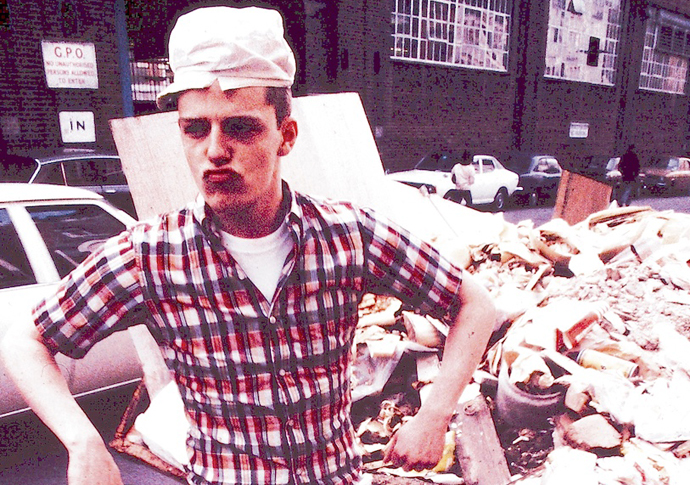
Suggs [Dave Robinson]
Madness’s geographical roots were something Dave recognised as a crucial element in how they developed as a band.
“Camden was a great place to be,” adds Dave, who is originally from Dublin. “And it was because of the Irish – follow the Irish publicans, and you’ll find music.
“It was a good way of getting the people in, getting them dancing, and getting them to drink large amounts of Guinness.
“There was this generation of Irish publicans bars, and to be frank, they did not really care about the music, just the numbers that came in.
“You’d find these Irish pubs that had a function room that were used for births, marriages and wakes.
“Because they were paying the breweries big numbers for the beers and rent, they needed to find ways to make money, and music was the answer.”
Camden Town’s Anglo-Irish community were a key part of the mix. They acted as both punters and performers, and brought a DIY musical influence, drawing on Irish music traditions.
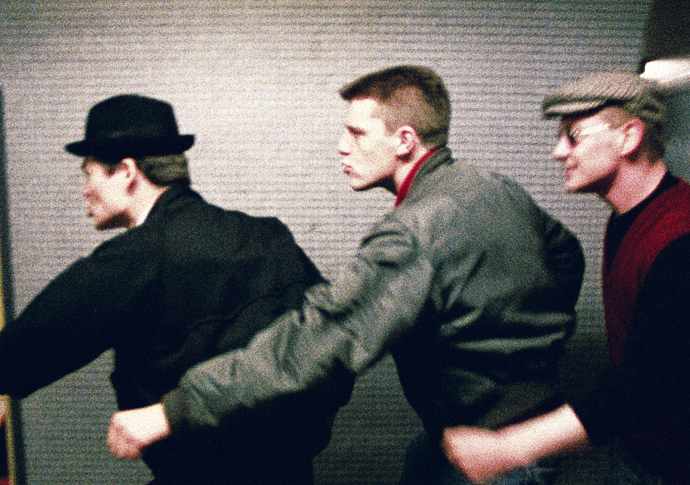
“For the Irish population it was important – Camden was place you could get a cheap room and fill your nights with reasonable entertainment. Out of that came Madness.
“I enjoyed Camden Town back then. The market hadn’t really got going, and it was still a very much working-class neighbourhood. Like The Beatles in Liverpool, Madness was the folk music of the day.”
In 1980, after Madness had passed the tough audition of playing Dave’s wedding, Dave set about capturing the band in a feature-length film. It has now been remastered by the British Film Institute and Dave is happy with the outcome.
“It flows really well,” he says. “They have done some work with the prints, and equalisers to the soundtrack.
“It means you can hear a little better the band’s mumbling! They were naturals. They were all interesting people – seven people, each with really clear personalities. They just wanted to talk about their story, what happened, where they were and how they got there.
“And these boys were used to filming. We knew we could make it quickly and do it on a budget. We interviewed them and we drew up 30 scenes.”
The film married Dave’s two interests – photography and music.
“I had been a photographer so I could assemble the elements,” he says.
“They had had their first hit 18 months previously and were still young enough to play their old selves. We went to places they knew.”
It means the film is full of nostalgic shots of Kentish and Camden Town streets, a snapshot of a neighbourhood that still feels like it is shaking off the desolation caused by the Second World War.
The British pop scene was ripe for a new wave and it came via the Two-Tone movement, which drew on ska.
“Ska music is fairly simple. It isn’t complex – and that is one of the reasons it was popular. Anyone could play it,” says Dave. “Like rock and roll, it is really simple – and that is why people were able to get together and make it. It was accessible.”
Dave saw the same ingredients come together at the start of the 60s. He was tasked in 1961 to take photographs of a certain band from Liverpool.
“I was commissioned to take pictures for a feature on the ‘Liverpool sound,” he says. “I went to the Cavern Club at lunchtime and there were eight bands playing, one of them was The Beatles.
“They were all pretty average – at least four of them did a version of Long Tall Sally. But then the Beatles went to Hamburg and came back with a new style and by then Lennon and McCartney were writing songs and that was special. The English were pretty terrible at writing pop songs at that time.
“And this was the case again in the 1970s. Queen were big and I thought it was complete crap – Bohemian Rhapsody, some of those lyrics are complete nonsense. A lot of the English bands in that spell in the early and mid 70s were just really naff.
“The Who had to smash up their guitars and amps to make people take notice, because people were not getting excited about the music.
“And then came ska, which was a really good thing – it cut across this malaise. It had a decent melody and a social conscience.”
• Take It Or Leave It, newly restored in 4K by the BFI, is in cinemas from October 1 and released on BFI Blu-ray/DVD on October 19
