Life lines: from Sky City to The Good, the Black and the Boujee
Black History Month offers the chance to celebrate the rich cultural heritage, history, and achievements of Black people. This year’s theme is Honouring Our Communities. Lucy Popescu selects 12 recently published or forthcoming books that explore Black lives and community in Britain and worldwide. There is also a selection of theatre, dance and exhibitions to enjoy throughout the month
Friday, 9th October — By Lucy Popescu
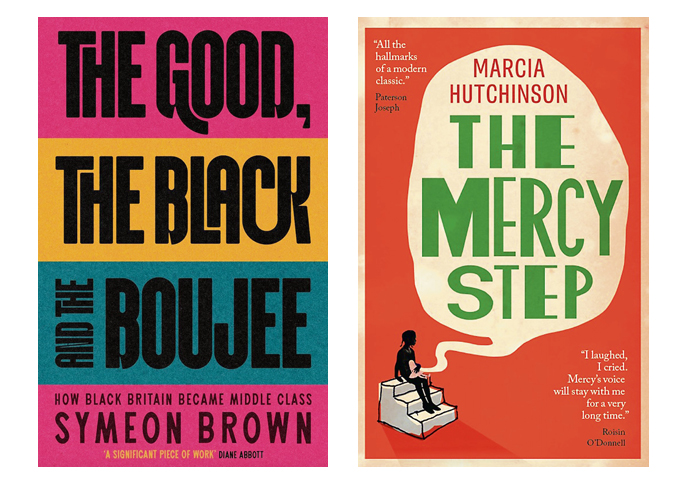
• IN The Good, the Black and the Boujee (Dialogue Books) Symeon Brown unravels the web of class and gender that shapes Black Britain today and reconciles the cultural and political conversations surrounding black British identity with lived reality. Whether dissecting the preference of educated black women to be single, the rise of black Conservative power brokers or the ways Black elites’ success can obscure working-class barriers, Brown exposes the psychological and material cost of class aspiration. A forensic study of how race, capital and identity entwine, and what is lost, gained and discovered through social mobility.
• Set in 1960s Bradford, Marcia Hutchinson’s The Mercy Step (Cassava Republic) follows Mercy, a precocious child facing a world far too big for her small body. She lives with her Windrush-generation parents in a crowded household where her mother’s attention is stretched between church and family, and her father’s temper is something to be endured or avoided. Retreating into books and the companionship of her beloved doll, Dolly, while dealing with the failings of the adults around her, Mercy’s story is one of Black British childhood, family and survival.
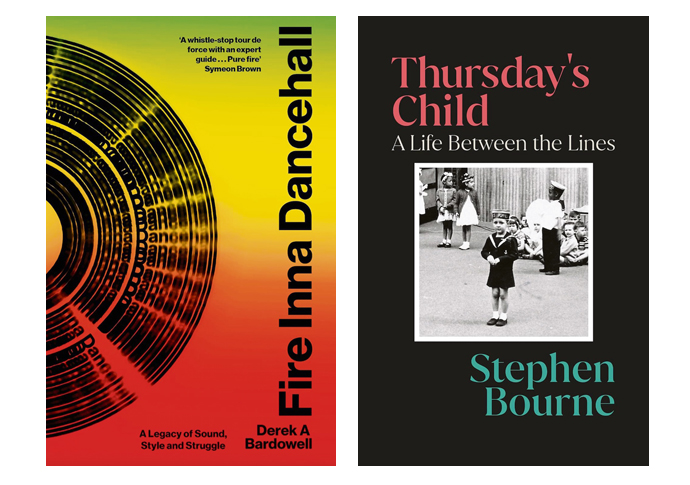
• Ex-reggae columnist Derek A Bardowell’s Fire Inna Dancehall (Dialogue Books) traces the collision of sound, style and struggle that created one of the most influential cultural movements of the past half-century. From inner city Kingston to London’s council estates, New York block parties and Panama and Puerto Rico’s underground scenes, Bardowell shows how dancehall speaks to migration, masculinity, faith, freedom and the fight for self-determination. A comprehensive guide to the people, places and politics that shaped dancehall, and an unapologetic tribute to Black creativity.
• In Thursday’s Child: A Life Between the Lines (Jacaranda Books) we follow Stephen Bourne through the back streets of Peckham and Camberwell as a gay British youth in 1960s and 70s. A curious and often misunderstood child, his loyalty to family carries him through bullying teachers and anchors his future as an aesthete, activist, and champion of the people. From Aunt Esther’s vivid reminiscences of post-war West London to Bourne’s professional and personal setbacks as a budding film critic and activist, this deeply personal social history traces family, war, identity and the making of a pioneering figure in British public life.
• Jamal, a gifted and introspective young poet, wakes in a quiet, claustrophobic recovery house after a devastating mental breakdown, unsure how the bright edges of his life have fractured. In this stark yet tender sanctuary, he encounters several wounded, but radiant souls wrestling with their own invisible storms, and finds in shared cigarettes, half-finished conversations and midnight confessions a hesitant, flickering sense of belonging. Derek Owusu’s The Recovery House (Merky Books) explores the music that survives inside us when language falters, the redemptive possibilities of friendship, and the courage required to rebuild a self.
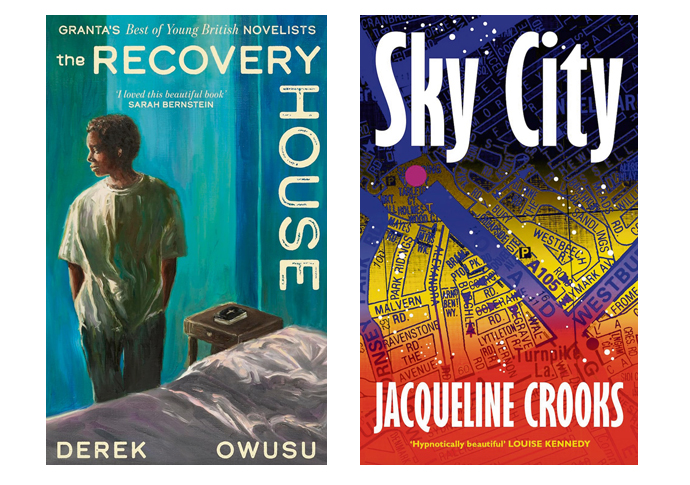
• Jacqueline Crooks’ Sky City (Jonathan Cape) follows Jaycee, who after years in a hostel for young homeless women finally has a room in Sky City, a north London estate. But her childhood still haunts her. When Sol, her old classmate and first love, reappears, he seems to offer a lifeline. Meanwhile, her best friend from the hostel, Ella-G, has left for New York’s glamorous music scene. Both women are daughters in search of fathers, and when Jaycee finds a rare record that may lead to Ella-G’s father, they head to Atlantic City for answers.
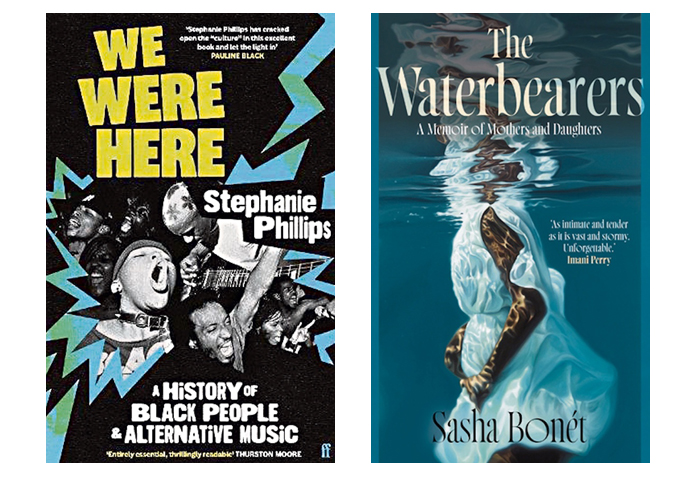
• Stephanie Phillips’s We Were Here: A History of Black People and Alternative Music (Faber) explores the extraordinary Black artists shaped rock’n’roll from the 1930s to the present day, including Sister Rosetta Tharpe, Little Richard, Jimi Hendrix, Tina Turner, Betty Davis, Poly Styrene, Bad Brains and beyond. Phillips argues that alternative music would not exist without Black artists, and that its future lies with Gen Z musicians pushing the boundaries of punk, metal, hardcore and indie.
• Sasha Bonét’s The Waterbearers: A Memoir of Mothers and Daughters (Merky Books) examines the joys and complexities of Black womanhood, motherhood and culture. Bonét’s grandmother, Betty Jean, raised eleven children alone, creating a home that became the heart of their family. Her daughter, Mama Connie, vowed to live differently but found herself echoing her mother’s struggles. Bonét reflects on the legacies of Black women such as Nina Simone, Michelle Obama, Rosa Parks and Darnella Frazier to build a portrait of Black womanhood across generations.
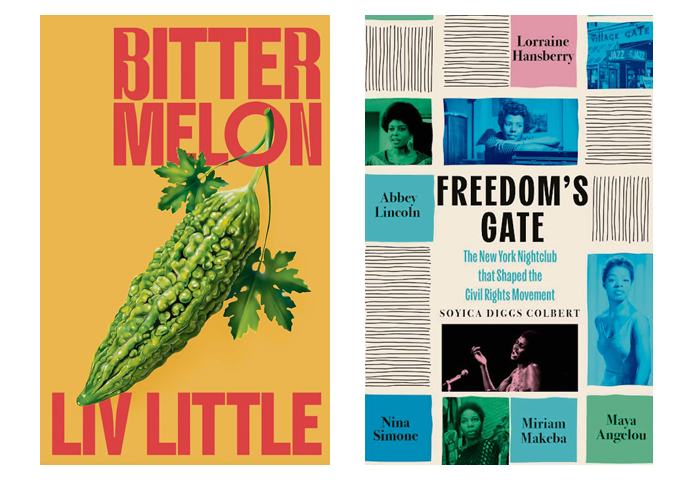
• Out this month Liv Little’s novel Bitter Melon (Dialogue Books) follows a father-daughter road trip across Jamaica that captures the fragility of life and love. Jalissa and her dad aren’t close, but when he invites her to Jamaica, his homeland, she agrees. She’s running from heartbreak and a loss of her own; he’s running out of time. As they travel through sun-drenched towns and navigate tangled family roots, old wounds and long-held silences, they meet people whose stories shift their own, helping them face the past, reckon with the present and reimagine what comes next.
• Forthcoming in November, Diggs Colbert’s Freedom’s Gate (Virago) is a group biography of five Black women artists in New York in the late 1950s and 60s: Maya Angelou, Lorraine Hansberry, Abbey Lincoln, Miriam Makeba and Nina Simone. Colbert explores how their friendships shaped their politics and art. Before they were household names, they performed at Village Gate, a nightclub that became a downtown hotspot for Black art, music and politics. Colbert depicts their deepening convictions and groundbreaking artistry as entertainers, activists and intellectuals, covering everything from A Raisin in the Sun to Mississippi Goddam and illustrating the Black freedom struggles of the era.
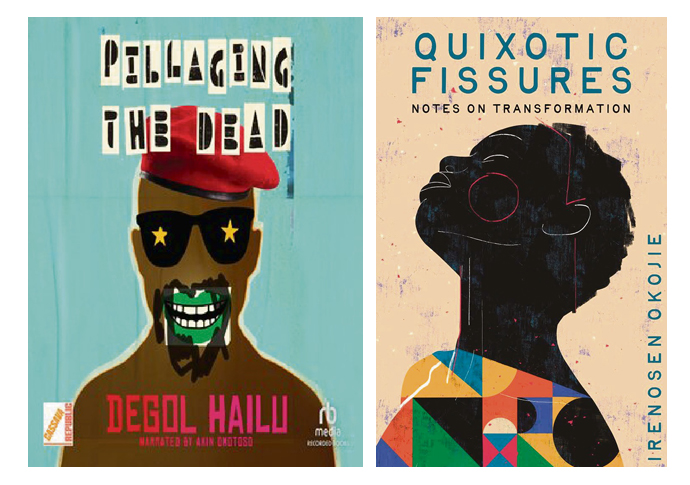
• Degol Hailu’s Pillaging the Dead (Cassava Republic Press) captures the absurdities of life under dictatorship in Africa. Tarik, a university student, sells banned books, pirated music and his own political cartoons to commuters caught in the city’s endless traffic. When a police raid turns violent and lands him in the custody of the feared Central Investigation Bureau, he is drawn into a dangerous world of underground printers, dissidents, activists and state surveillance. As he navigates corrupt officials, revolutionary artists, secret police and citizens struggling to survive under authoritarian rule, Tarik begins to understand the true cost of dissent in a country where satire is treated as a threat to the state.
• Irenosen Okojie’s Quixotic Fissures (Dialogue Books) is a collection of autobiographical essays reflecting on the pivotal moments that have transformed her. Okojie moves through the landscapes of body and mind: illness and depression, inheritance and grief, prejudice and belonging, memory and desire. In reconnecting with her cultural heritage, she finds in the music, movement and traditions of her family ways to understand herself.
