Let’s tackle all the health stigmas and help women to flourish in workplace
Ahead of International Women’s Day on Sunday, Caitlin Maskell listened to health and business experts talk about what needs to change for equality in employment
Friday, 6th March — By Caitlin Maskell
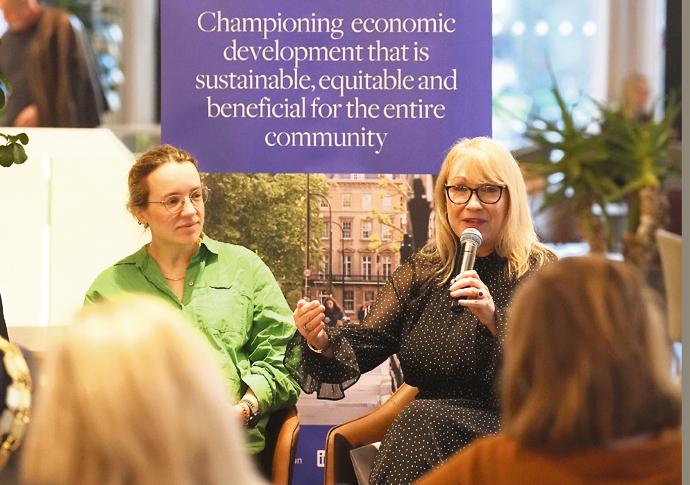
Dr Bethan Jones and Ruth Duston at the CDA event
THE buzzword from a panel discussion highlighting inequalities women face in the workplace was clear: flexibility.
Speaking to a packed room of health professionals, business owners and employees, NHS experts stressed that greater workplace flexibility is essential to better support women and transform women’s healthcare outcomes.
The discussion took place at an International Women’s Day business breakfast held at the Orangery in New Oxford Street, hosted by Debbie Akehurst, chief executive officer of the Central District Alliance (CDA), a business Improvement District (BID) that works in Holborn, Bloomsbury and St Giles in Camden and Farringdon and Clerkenwell in Islington.
The panel of NHS experts, which included Angela Thomas, Dr Julie Hammond, Dr Bethan Jones and Ruth Duston and chaired by Camden councillor Sabrina Francis described how a rigid workplace system often failed women experiencing health issues and that greater flexibility and understanding were urgently needed.
“Women’s health conditions are affecting women going to work and being able to work,” said GP Dr Julie Hammond, adding: “There has been a significant reduction in mothers who are able to return to work full time after giving birth.
“Menopause is also another major reason women are leaving the work place in masses.”
Dr Hammond said that it was estimated that around 3.5 million women are leaving the workplace due to medical related symptoms.
As women account for 51 per cent of the population, this not only had a personal impact on women’s finances but also on the economy.
“One thing we need to do is educate women about their rights and encourage and support women to go back to work,” she said.
“We need to have policies in place to support women post birth, during their menstruation cycles and also consider how conditions such as endometriosis affect women’s abilities to work.”
In the UK, 150 million working days are lost annually due to poor women’s health, equating to an estimated £11 billion loss to the economy each year.
Ruth Duston, founder and CEO of Primera Corporation said: “Employers need to provide a flexible workplace and education for both women and men.
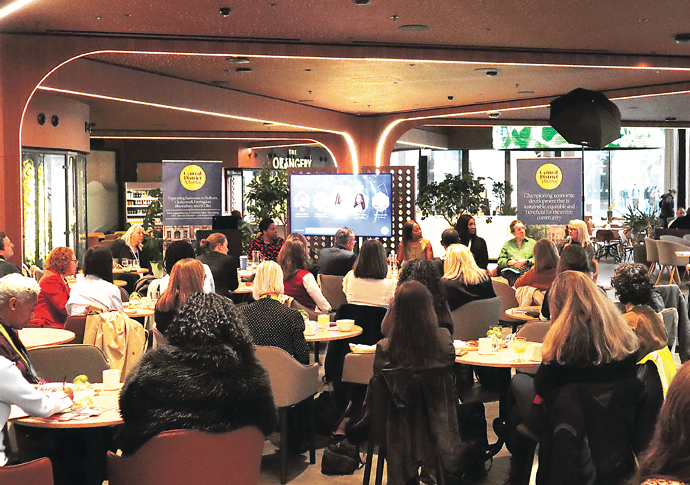
National Health Service and business professionals at the breakfast
“As well as young mothers returning to work, we need to address menopausal women with care duties, check in on individuals and offer them what they need.”
In April 2023, the CDA published a piece of research called UnBiased examining the barriers to an inclusive and fair economy for women and how they can be removed or mitigated.
The findings revealed that two in five young women have experienced discrimination at work or when seeking employment.
It also found that women were nearly 34 per cent less likely than men to receive pay for internships.
The research highlighted a clear need for more flexible working arrangements, including part-time roles, job shares and flexible shifts that help women balance work and home life.
“Women’s health conditions can be very complex,” said Dr Bethan Jones, a GP at Blackfriars Medical Practice.
She added: “Women have health conditions relating to them being women but we don’t fully understand them.”
Dr Jones said that on average it takes nearly nine years to get an endometriosis diagnosis.
“When your primary care clinician doesn’t have the right knowledge and skills that contributes to this fragmentation of care.
“It’s very challenging and contributes to this stigma and embarrassment, having to have this same conversation over and over again, appointments with different clinicians, for different women’s health issues which contributes to the long waits that women face in key services. Waits for gynaecology are among the highest of any specialty.
“If we can deal with these issues in primary care that is much better for everyone.”
The panel discussed the role of technology and innovation in addressing women’s health inequalities, while warning that data from artificial intelligence must include all backgrounds of women.
Dr Hammond said: “Globally only 5 per cent of health research and development funding is allocated to women’s health conditions. When you remove cancer approximately 1 per cent of the funding is dedicated to women’s health conditions.
“When we are designing innovation we have to make sure we are inclusive of all women of all backgrounds, disabilities, social economic status. We need to make sure we are training data according to women populations and not just based on male data. Otherwise that will widen our inequalities.”
Angela Thomas, of the Commonwealth Businesswoman’s network added: “You can use technology to impact more people. There are some great technological innovations that are coming out of the fem tech space which is projected to be $11 trillion by 2035.
“That can be used or adapted by employers to help them retain or protect their own workforce.”
Ms Duston said despite the potential benefits of technology practical changes in the workplace were key.
“It all comes back to flexible working arrangements so women feel supported and can flourish and thrive. Making sure men feel comfortable with those conversations is important too, making them familiar with the language. It is about checking in on people, and goes beyond policy, as we don’t all fit neatly into one box.”
The CDA, organised the breakfast in partnership with Orangery, Sodexo, UK Black Tech and Dress for Success.
