‘Festival culture in the UK is the best, and by far the most extensive’
The UK reigns supreme when it comes to music festivals, says Love Supreme DJ Colleen Murphy. Dan Carrier talked to her
Thursday, 11th June — By Dan Carrier
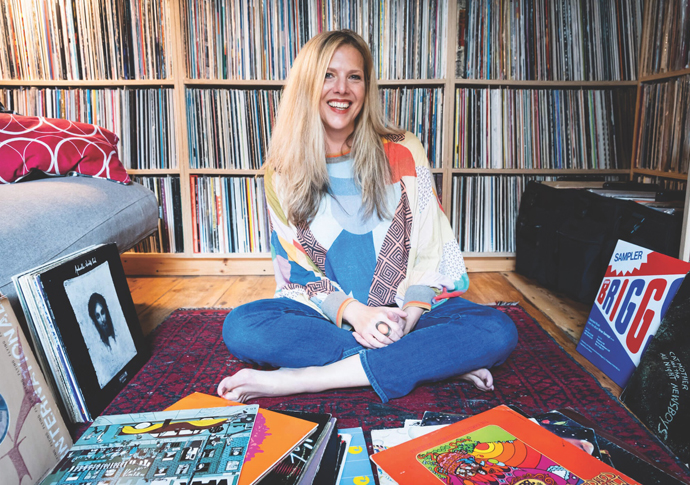
Colleen ‘Cosmo’ Murphy [Murphy Press]
DO not leave these shores for the greatest musical experiences in the world – no other country does festivals like we do. So says DJ and producer Colleen “Cosmo” Murphy.
And she should know: Colleen has played all over the world. Hailing originally from Massachusetts, USA, her work has seen her play big sets to the most musically clued-up audiences there are.
In July she takes to the stage at Love Supreme, the jazz, soul and funk weekender, a short hop from London in Sussex.
“Festival culture in the UK is the best, and by far the most extensive,” she told Review.
“I went to Lollaplooza [a festival in the 1990s originally organised by Jane’s Addiction singer, Perry Farrell] in New Jersey and it was fun, but it had just one stage. It wasn’t anywhere near what you get here.
“In terms of breadth, range and quality, the UK is the leading country in the world for festival culture. It is ingrained.”
Colleen began her career as a teenager with a burning love of radio. She co-presented a show aged 16 called Punk, Funk and Junk and as a student in New York became the NYU’s first female programme director.
Today, you can find her behind the decks and mic on Mixcloud with her Balearic Breakfast show, remixing established artists and hosting her Love Dancin’ sound system.
Forging a career in a gender-biased industry has not always been easy, however. “Being a female DJ for 40 years means I know the challenges. I have lived that,” she says.
“Overall, my experience has been generally positive. I had a lot of great guys looking out for me, some heavyweights in my corner, male colleagues who have been supporters and mentors.
“But I have suffered from sexism and I have been wary of talking about it. People say you are playing a ‘woman’ card.”
Discrimination can come in many forms, she has found. “People who deliver unconscious sexism are often hetero white males who think they are liberals,” she says.
“They refuse to see that they are judging me using different standards.
“I was made to reflect on this when I had a baby. Doors started closing. Sexism, racism, homophobia, transphobia can be very obvious – but often it isn’t obvious at all, like unconscious bias. I have had to prove myself, take stuff on the chin.”
As well as watching the music industry evolve, she has seen the impact technology has had on how we produce and consume music. While the explosion of tech in music production has helped her with her work, she says the biggest changes to life as a DJ is the way people access her music.
“Broadcast has been something constant. I have played on syndicated radio shows for 200 terrestrial stations,” she says.
“These spots were coveted. You can only have a certain number of frequencies on FM and AM. There are a limited number of stations and a limited number of opportunities. This means you get more light shined on you. Giles Peterson said that when he was doing his Radio One show he could shift one million copies of an album because one million people were listening.
“Having limited opportunities made people very professional. Now there are so many platforms. Sometimes I listen to online stations and the presenters are terrible. They do not have the voice, character, personality. They may play excellent music but they cannot present. They would never get a slot on a terrestrial station. But then there are those who have the skills but not the opportunity.”
Today, she puts her DJ sets up on the website Mixcloud, making them easy to access and free.
“I make shows myself now and no one tells me what to do,” she says. “There is always a balance to be struck. It’s worth remembering that music has always been linked to technology – Edison and the phonograph, Bell and the gramophone. From records to broadcasting, music never stood still.
“Musicians’ unions were upset at the advent of recording. Musicians were worried they’d lose work.
“But think about it – before recording, if you wanted to hear a piece of music, you had to hear it played live. It might mean hearing something you love just once, ever.”
For Colleen the skill of a DJ is to know the who, what, when and where.
“Some DJs are more performers and they are not about reading the crowd,” she says.
“I choose my first couple of tunes and then I see what is happening – it is all about the context, the time of day and I play in different ways. I am different in a smaller party than a huge festival.”
Colleen has remixed artists from Roisin Murphy to Horace Andy, The Cure, Fat Freddy’s Drop, Candi Staton and St Etienne. If she could work with one name? “It would have to be Carlos Santana. He is my favourite guitarist and it’s one of my favourite instruments. He has done so many different things – rock through to spiritual jazz. I always pick up his LPs – he is on another planet.”
Now Colleen is leafing through her record collection, preparing for a set at Love Supreme.
“I know no matter where I go on-site, there will be interesting music,” she says. “I may not like everything but I will know why they are there. I can experience new sounds I did not know about. I am such a music nerd.”
• Love Supreme runs from July 3-5 at Glynde Place, East Sussex. https://lovesupremefestival.com/
