‘As an artist, he kept back some of his better work – he was pretty well off’
Ahead of a new exhibition, Dan Carrier examines the work of Albert de Belleroche
Thursday, 26th November — By Dan Carrier
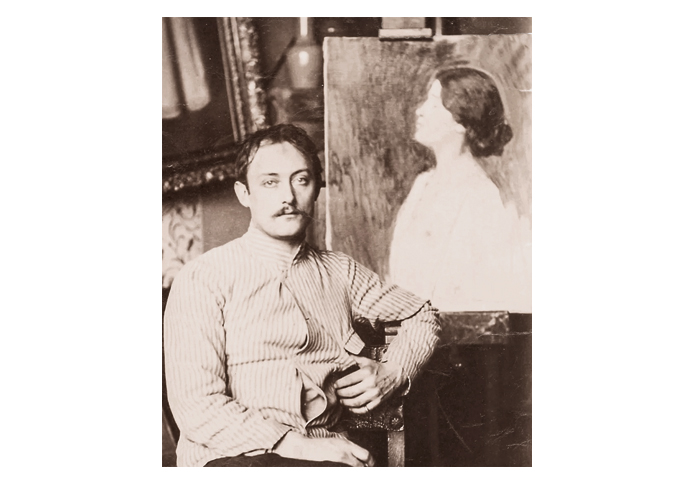
Albert de Belleroche self-portrait photograph in his studio – with painting of Lili, c1890 [© The Artist’s Estate, courtesy of Liss Llewellyn]
ALBERT de Belleroche’s work is linked to that of his friend and lover, the artist John Singer Sargent. He moved in literary and artistic circles, counting Emile Zola, Toulouse-Lautrec, Degas and Oscar Wilde among his close friends.
And while he is intrinsically linked with the Victorian and Edwardian art world in Paris, much of his work was created in a little studio off West End Lane.
Now a major exhibition at the Three Highgate gallery brings together works from his studio in a celebration of a Welsh painter and lithographer who helped visualise an artistic movement.
Belleroche was born in Swansea in 1864 and as a young man headed to Paris to paint.
He was a success: moving between oils and print, he was celebrated by critics and given his own rooms in blockbuster exhibitions in the French capital.
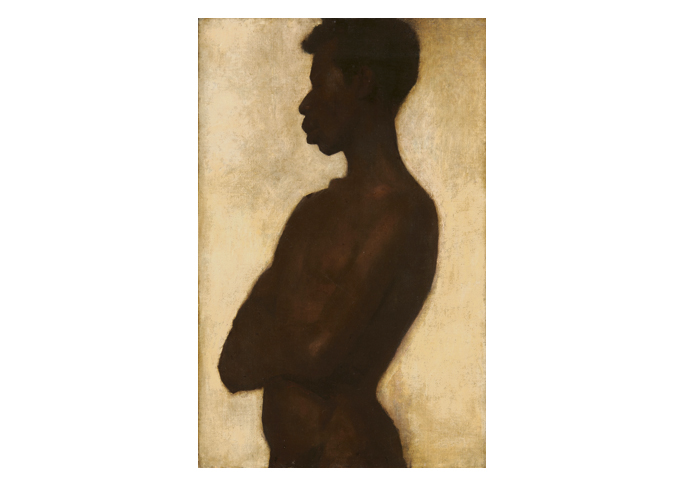
Belleroche’s half-length Portrait of a Nude Black Man, 1890s [© The Artist’s Estate, courtesy of Liss Llewellyn]
However, while enjoying acclaim, he has not become as well known as his contemporaries: never having to paint for a living as he had independent means, he could pick and choose his subjects.
It meant, unlike Sargent, he did not rely on the big ticket commissions that would make Sargent a household name.
The exhibition includes portraits of his wife, Julie Visseaux, and a mistress, giving the viewer a glimpse into a personal life that was not straight-forward. It is said he was also the lover of Sargent, who painted him on numerous occasions.
Curator Alistair Hicks writes about art and puts together exhibitions. He has recently completed a show based on Paula Rego, and now has put together the works of Belleroche for Three Highgate.
The exhibition begins in December and gives the viewer the chance to discover a near-forgotten genius who created reams of beautiful works from a studio in Hampstead.
“The vast majority of artists are forgotten,” Alistair reflects. “The history of art is told by under 1 per cent of pictures that are reproduced. It is not the most efficient of worlds.” Belleroche was part of the so-called Belle Epoque movement – a flowering of gorgeous fashion and art in France that blossomed from the end of the Franco-Prussian war in 1871 and ended with the outbreak of the Great War in 1914.
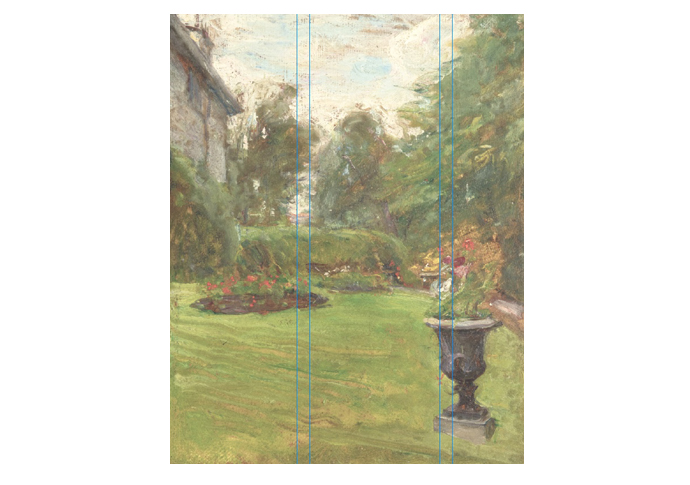
The Artist’s Garden Glencairn (1913), with stone flowerpot, Hampstead [© The Artist’s Estate, courtesy of Liss Llewellyn]
“It included the Impressionists and the Art Nouveau movement. The French influence was pronounced – and Belleroche, from a family of Huguenot refugees who settled in Swansea, was well placed to absorb it.
“Having a French surname was definitely an advantage in the art world,” adds Alistair.
“The British were always emulating what was happening in Paris.”
Belleroche moved to Hampstead in 1912 and produced a series of personal works from his West End Lane address.
The son of a count, he did not, like so many of his contemporaries, face a daily economic battle to put food on the table. The knock-on effect of this meant if he painted something he particularly liked, he would not be under immediate financial pressure to sell it. He also moved in the upper echelons of artistic circles.
The exhibition draws on works in Belleroche’s studio.
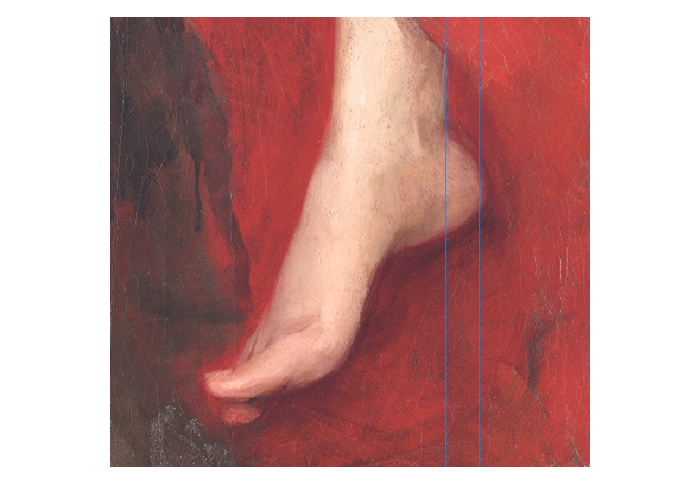
Study of a Foot, early 1800s [© The Artist’s Estate, courtesy of Liss Llewellyn]
“The studio collection is representative of Belleroche,” Alistair adds. “As an artist, he kept back some of his better works. He was pretty well off, not impoverished, so he could account and if he liked the work, he could keep it.
“And the economic pressures were not overbearing on him, unlike many other artists. His studio in West Hampstead was a bohemian place, full of friends – but he worked very hard.”
He shared his studio with Sargent. “The art world was not very big and they met and fell for each other,” says Alistair. “They were similar in style and Belleroche was influenced by Sargent. It went both ways.”
His friendship with Wilde is said to have inspired the story, The Picture of Dorian Gray.
“Wilde knew him well – they were very much part of this Anglo-French artistic community. It has been said he is most likely to have inspired Gray. He was a glamorous and ageless figure and moving in the right circles.”
Belleroche began his career as a painter and then moved into print-making and lithographs.
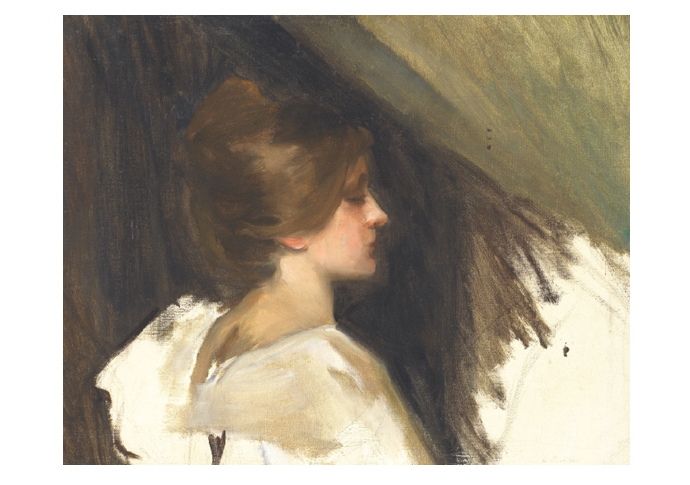
Profile portrait of (his wife) Julie Visseaux, c1908 [© The Artist’s Estate, courtesy of Liss Llewellyn]
“In those days, these mediums were more interconnected,” Alistair adds.
“Print-making was very important if you wanted to be known. It was a good way to publicise your work. Print-making could be seen in more places, and was an important form of public communication. Print-making was very much regulated. They would make 100 prints and then break the mould afterwards so it could not be used again. That safeguarded its value.”
Belleroche’s work has fallen away from the public eye – his Edwardian style was usurped on the art world by the advent of Modernism and Surrealism. It means the Three Highgate show will reveal his style to a new audience.
“People do go out of fashion, and you get this situation where their art is no longer seen,” adds Alistair. But as this exhibition shows, beautifully rendered art will never really go out of fashion.
• Albert De Belleroche: Dorian Gray runs from December 3 to March 31, 2027. The exhibition is open 2pm to 6 pm on Thursdays and Saturdays, noon to 4 pm on Sundays, and by appointment on all other days at Three Highgate, 3 Highgate High Street, N6 5JR. See www.threehighgate.com/
